Mars in Vedic Astrology Nature, Emotions, and Its Influence on Personality In Vedic astrology, Mars represents energy, courage, strength, and action. It is the planet that governs initiative, determination, and the ability to face challenges. Mars inspires individuals to act with confidence and assertiveness, giving them the power to confront difficulties and move forward with determination. However, the influence of Mars depends greatly on its position in a horoscope. When Mars is placed in a favorable or auspicious position, its energy becomes constructive and beneficial. When it occupies an unfavorable or inauspicious position, its energy may become aggressive or destructive. Because of this dual nature, Mars can influence a person’s character in very different ways. Mars in an Auspicious Position When Mars is placed in an inauspicious position, its powerful energy may become uncontrolled or misdirected. Instead of courage and strength, the individual may develop negative qualities related to anger and impulsive behavior. Such a person may become short-tempered and easily irritated. Anger may arise quickly, often leading to conflicts and arguments with others. This emotional instability can make relationships difficult and may create unnecessary disputes in daily life. In such circumstances, a person may also develop habits such as gossiping, speaking falsely, or behaving in a deceitful manner. The individual may become harsh in speech and actions, showing little patience or tolerance toward others. An inauspicious Mars can also create strong passions and uncontrolled desires. This may lead to lustful behavior or impulsive actions driven by temporary emotions rather than thoughtful judgment. Because of these tendencies, the person may become quarrelsome and inclined toward disputes. Greed and selfishness may also appear, encouraging actions motivated purely by personal gain. In extreme cases, Mars in an unfavorable position may lead an individual to act violently or unjustly. They may develop a tendency to harm others or seek revenge when they feel wronged. Such behavior reflects the destructive side of Mars when its powerful energy is not guided properly. These qualities illustrate how Mars, when placed in a weak or unfavorable position, can create difficulties in both personal behavior and relationships. Mars in an Inauspicious Position When Mars is placed in an auspicious position in the horoscope, its energy becomes balanced and constructive. Instead of aggression, the individual develops qualities that reflect strength combined with discipline and responsibility. Such a person may become calm and patient, able to control emotions and respond thoughtfully to challenges. The courage of Mars remains present, but it is expressed through self-control rather than anger. Mars in a favorable position also creates compassion and generosity. The individual may become charitable and willing to help others. Their strength is used to support and protect rather than to harm. Another important quality associated with a strong Mars is courage. The person possesses bravery and determination, allowing them to face difficult situations with confidence. They are not easily discouraged by obstacles and often show persistence in pursuing their goals. Mars also strengthens religious inclination and moral conviction when placed favorably. The individual may develop respect for spiritual principles and a sense of responsibility toward ethical behavior. Leadership is another important quality that emerges from a well-placed Mars. Such individuals often possess a strong desire to guide others and take initiative in difficult situations. They are firm in their decisions and capable of standing by their beliefs with determination. This firmness does not come from aggression but from inner strength and confidence. A person influenced by an auspicious Mars can lead with courage, discipline, and responsibility. The Balanced power of Mars Mars represents raw energy and action. Whether this energy becomes constructive or destructive depends largely on how it is directed. In a favorable position, Mars encourages courage, compassion, patience, and leadership. In an unfavorable position, the same energy may express itself through anger, violence, and selfishness. Understanding the nature of Mars helps explain how powerful emotions and impulses influence human behavior. When guided by wisdom and discipline, the strength of Mars can become a powerful force for progress and protection. Conclusion Mars plays an important role in shaping courage, determination, and action in Vedic astrology. Its influence can create either destructive tendencies or strong and noble qualities depending on its placement in the horoscope. When Mars occupies an inauspicious position, it may lead to anger, deceit, greed, quarrels, and even violence driven by selfish motives. However, when it is placed in an auspicious position, Mars brings calmness, patience, compassion, charity, courage, and religious inclination. It also gives a strong desire for leadership and the ability to stand firmly by one’s beliefs. Through this dual nature, Mars teaches the importance of directing strength and power in a disciplined and righteous manner. Book your Private Consultation Order your Vedic Kundali Edit Template

Jupiter in Astrology
Jupiter in Vedic Astrology Nature, Emotions, and Its Influence on Personality In Vedic astrology, Jupiter is known as Guru, the great teacher and guide. The word Guru itself signifies wisdom, knowledge, and guidance. Jupiter represents higher learning, moral values, and the ability to understand life with clarity and depth. It is considered one of the most benefic planets in astrology because it promotes wisdom, truth, and prosperity. The nature of Jupiter reflects qualities such as eloquence, virtue, wisdom, and truthfulness. People influenced by Jupiter are often serious in their approach to life and capable of thoughtful judgment. They tend to act with prudence and often become advisors or guides for others. Jupiter inspires individuals to seek knowledge, understand deeper truths, and act in ways that benefit society. Because of these qualities, Jupiter is closely connected with humanity and compassion. A person under the influence of Jupiter often develops a love for humanity and a desire to contribute positively to others. Jupiter’s Intellectual and Moral Nature Jupiter is known for its strong intellectual influence. It gives a person the ability to think deeply and understand complex ideas. The mind under Jupiter’s influence is steady and thoughtful. Such individuals often possess the power of reflection and careful reasoning. Because of this strong thinking ability, Jupiter is associated with wisdom and intelligence. It promotes a balanced and thoughtful approach to life. Rather than acting impulsively, Jupiter encourages individuals to analyze situations carefully and make decisions based on knowledge and understanding. Jupiter also supports truthfulness and moral conduct. A person influenced by Jupiter often values honesty, fairness, and ethical behavior. These qualities allow them to gain the trust and respect of others. Physical and Temperamental Characteristics of Jupiter In traditional descriptions of Vedic astrology, Jupiter is associated with a Kapha nature. This means it relates to stability, calmness, and balance. The physical characteristics symbolically associated with Jupiter include a yellow complexion, a tall and stout body, and a dignified presence. Individuals influenced by Jupiter are often generous and kind-hearted. They possess a natural inclination toward helping others and sharing knowledge. Jupiter also gives cleverness and intelligence, allowing individuals to communicate ideas clearly and effectively. Speech influenced by Jupiter is often powerful and influential. A person may speak in a way that carries authority and wisdom, making others attentive to their words. Jupiter and power of thought One of Jupiter’s strongest qualities is the power of thinking. The planet governs higher reasoning and thoughtful reflection. Its influence creates a mind that is stable, calm, and capable of deep understanding. A steady mind allows individuals to approach problems with patience and clarity. Instead of reacting emotionally or impulsively, Jupiter encourages thoughtful decision-making. This quality often leads individuals toward positions of guidance or leadership where their wisdom can benefit others. Because of its connection with thoughtful reasoning, Jupiter is also associated with education, philosophy, and spiritual knowledge. Jupiter as a Symbol of Happiness and Prosperity Jupiter symbolizes happiness, joy, and prosperity in life. Its influence often brings growth, expansion, and positive opportunities. When Jupiter is strong and well placed in a horoscope, it enhances prestige, reputation, and respect in society. Individuals with a favorable Jupiter placement may experience success through knowledge, wisdom, and ethical conduct. They often gain recognition for their intelligence and moral character. However, Jupiter’s positive influence depends on its position in the horoscope. If Jupiter is not placed in an auspicious position, its ability to support prosperity may weaken. In such situations, wealth and material stability may decrease or fluctuate. Even then, Jupiter continues to represent the potential for growth through knowledge and wisdom. Jupiter in Combination with Other Planets The influence of Jupiter changes when it forms connections with other planets. These combinations create different qualities and tendencies in a person’s character. Let’s understand the behaviour and influence of Jupiter when it comes in same house of your horoscope/astrology chart. Planet Behaviour of Jupiter Moon When Jupiter combines with the Moon, its nature becomes rajasic and self-willed. This combination can produce strong emotional motivation and determination. The person may act with confidence and personal conviction. Sun When Jupiter forms a connection with the Sun, its nature becomes sattvic. This combination promotes purity of thought, wisdom, and noble qualities. It often produces individuals who value truth, ethics, and higher knowledge. Mars When Jupiter is combined with Mars, its nature becomes tamasic. This combination can create stronger impulses and intense energy. The individual may display determination and forceful action. Mercury & Venus When Jupiter is connected with Mercury and Venus, it becomes hostile to evil influences. This combination strengthens the person’s moral judgment and their ability to oppose harmful or negative actions. It encourages wisdom and discernment, helping individuals recognize the difference between right and wrong Jupiter’s Role as a Guide In Vedic astrology, Jupiter is often seen as a guiding force in life. It represents the teacher who helps individuals develop wisdom, understanding, and ethical awareness. Jupiter encourages people to pursue knowledge and cultivate noble qualities such as truthfulness, generosity, and compassion. Its influence often leads individuals toward roles where they can guide others, share knowledge, or promote the well-being of society. Because of this guiding nature, Jupiter is associated with teachers, scholars, advisors, and spiritual leaders. Conclusion Jupiter, or Guru, represents wisdom, truth, and thoughtful understanding in Vedic astrology. Its nature is eloquent, virtuous, wise, and serious. It encourages individuals to think deeply, act prudently, and contribute positively to humanity. With its Kapha nature, steady mind, and powerful thinking ability, Jupiter promotes knowledge, generosity, and moral conduct. It symbolizes happiness, joy, and prosperity, especially when placed in an auspicious position in the horoscope. Although its influence may vary depending on planetary combinations and placement, Jupiter ultimately represents the guiding wisdom that helps individuals grow intellectually, morally, and spiritually. Book your Private Consultation Order your Vedic Kundali Edit Template
Saturn in Astrology
Saturn in Vedic Astrology Time, Karma, Discipline, and Life’s Results In Vedic astrology, Saturn is closely connected with life’s activities and the results that come from them. Life does not move forward without action. Every step of progress is created through effort, work, and responsibility. Saturn represents this fundamental truth of life: that actions always lead to results. What a person does today eventually shapes what they experience in the future. Saturn reminds us that progress is not accidental. It is the direct outcome of the actions we take. Without action, there can be no growth, no achievement, and no meaningful development. Because Saturn governs the results of actions, it is deeply connected with the law of karma in Vedic astrology. Saturn and the Results of Actions Every activity in life produces a result. Some results appear quickly, while others take time to unfold. Saturn is the planet that represents these results, especially those that come after long periods of effort or neglect. In many ways, Saturn shows how the past influences the present. The actions we performed earlier in life often create the circumstances we experience today. Good actions may bring stability and success, while careless or irresponsible behavior can lead to challenges and obstacles. Because of this connection, Saturn is often understood as the planet that delivers the fruits of karma. It does not create results randomly. Instead, it reflects the consequences of our own choices and efforts. Saturn as the Planet of Time Time is one of the most important principles associated with Saturn. Progress in life is measured through time. Achievements rarely happen instantly; they require patience, endurance, and consistent effort. Saturn represents this slow movement of time. It teaches that meaningful progress usually develops gradually. Just as a tree grows slowly over many years before becoming strong and stable, success in life also requires time to develop. This is why Saturn is often linked with patience and long-term effort. The planet reminds us that lasting success is rarely quick or easy. Instead, it is built through steady dedication over time. Through its connection with time, Saturn also represents maturity and life experience. As time passes, people gain wisdom through both success and hardship. Saturn governs this gradual process of learning through experience. Saturn and Fate Saturn is also connected with the concept of fate. However, in Vedic astrology, fate is not something that exists independently of human effort. Instead, fate is shaped by the actions a person takes throughout life. Luck, whether good or bad, is often the result of effort. A person who works with discipline and responsibility may gradually create favorable circumstances. On the other hand, someone who ignores responsibilities or avoids effort may create difficulties for themselves. In this way, Saturn shows that fate is closely connected with karma. The results we experience are often the natural outcome of the actions we have taken before. Saturn and Discipline One of Saturn’s most important qualities is discipline. Saturn governs the rules and regulations that maintain order in life. It represents structure, responsibility, and moral behavior. Without discipline, progress becomes difficult. Saturn encourages individuals to live with self-control, patience, and responsibility. It reminds people that lasting achievements require consistent effort and respect for the natural rules of life. People strongly influenced by Saturn often develop qualities such as seriousness, perseverance, and dedication to their duties. These qualities help them build stable foundations in life. Saturn also encourages respect for authority, traditions, and social responsibilities. It emphasizes the importance of living within certain boundaries and maintaining ethical conduct. Saturn and Moral Responsibility Saturn is also connected with morality. It represents the principles that guide responsible behavior. When people act with honesty, integrity, and discipline, Saturn supports their long-term progress. However, when these principles are ignored, Saturn may bring difficulties. If someone disregards responsibilities, breaks important rules, or behaves carelessly, Saturn may respond with obstacles or setbacks. These experiences are not simply punishments without purpose. Instead, they serve as reminders that actions have consequences. Saturn encourages individuals to recognize their responsibilities and act with greater awareness. Saturn’s Challenging Side Because Saturn represents discipline, responsibility, and the results of karma, it is often associated with difficult experiences. In astrology, Saturn can remove comfort and ease when necessary. During certain periods of life, Saturn may bring poverty, sorrow, suffering, troubles, or obstacles. These experiences can appear harsh, but they are closely connected with Saturn’s role as a teacher. When comfort disappears, people are often forced to face reality more directly. They must develop patience, endurance, and determination in order to overcome challenges. Saturn creates situations that test a person’s strength and character. These challenges are meant to shape individuals into stronger and wiser people. Through struggle, people learn the importance of discipline, responsibility, and perseverance. Saturn as a Teacher Although Saturn is sometimes feared in astrology, its deeper purpose is educational rather than destructive. Saturn teaches through experience rather than comfort. Easy situations do not always encourage growth. Difficult circumstances, however, often push individuals to reflect on their actions and make meaningful changes. Saturn uses challenges to encourage maturity and self-awareness. Over time, those who learn Saturn’s lessons often become stronger, more disciplined, and more capable of handling responsibility. They gain wisdom through experience and develop a realistic understanding of life. The Long-Term Rewards of Saturn While Saturn may bring difficulties, it can also provide lasting rewards. The planet favors patience, persistence, and steady effort. People who remain disciplined and responsible over long periods often gain stability and respect. Saturn’s rewards are usually not sudden or dramatic. Instead, they appear gradually as the result of consistent effort and commitment. Success gained under Saturn’s influence is often stable and long-lasting. For this reason, Saturn is closely associated with endurance and long-term achievement. It teaches that meaningful success is built slowly through dedication and hard work. Conclusion Saturn’s nature in Vedic astrology is deeply connected with action, time, discipline, and the results of karma. It represents the principle that
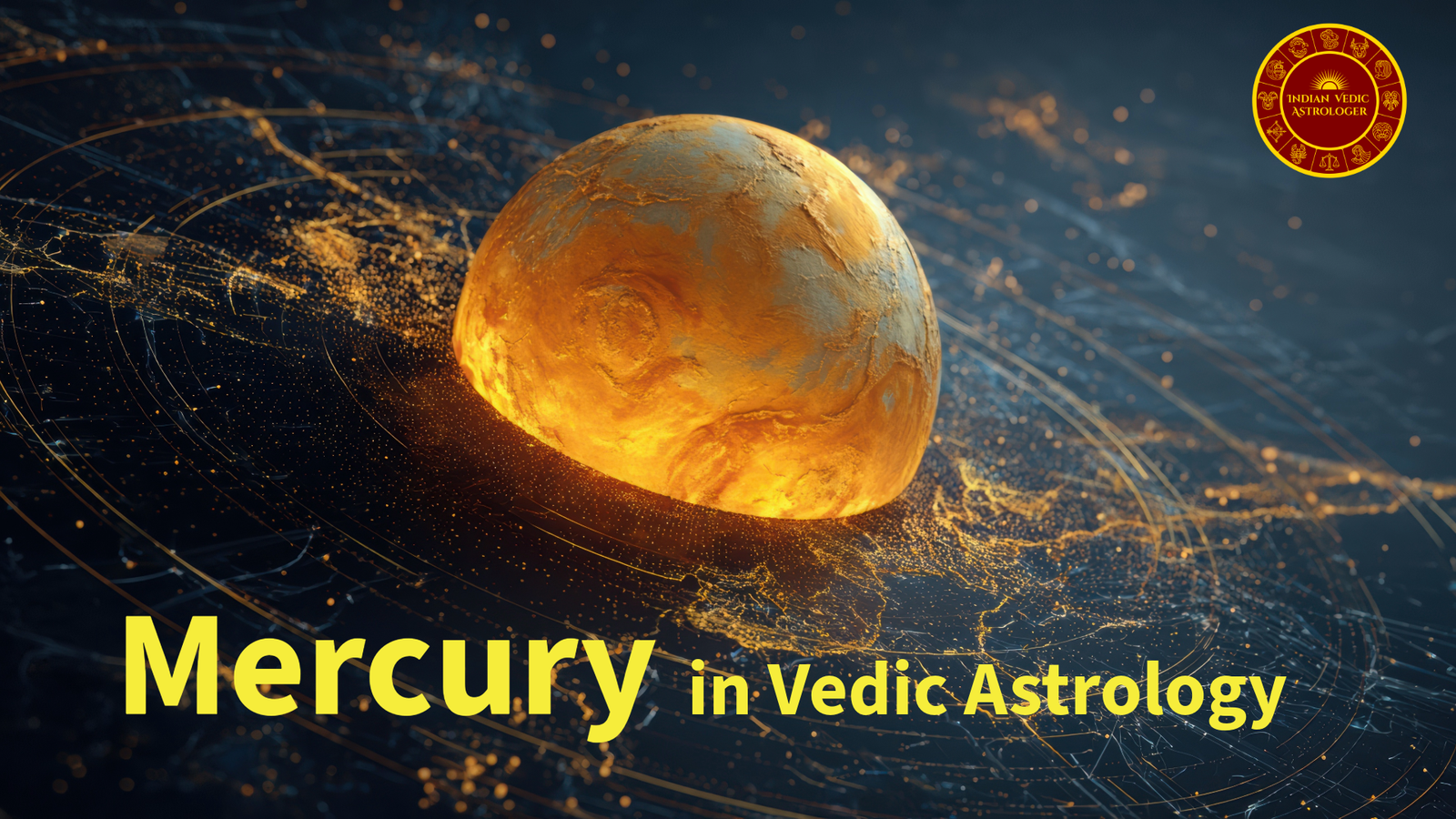
Mercury in Astrology
Mercury in Vedic Astrology Nature, Intelligence, and Its Influence on Personality In Vedic astrology, Mercury represents intelligence, communication, adaptability, and mental activity. It is a planet closely connected with learning, speech, wit, and the ability to understand situations quickly. Mercury’s nature is lively and flexible, allowing a person to adjust according to circumstances, environment, and company. Mercury is often associated with curiosity and intellectual interests. It encourages the mind to explore different subjects and develop knowledge in various areas. People influenced by Mercury usually possess a natural interest in literature, poetry, music, and artistic expression. These interests reflect Mercury’s creative and thoughtful mental qualities. Because of its intellectual nature, Mercury also governs communication. It gives the ability to express thoughts clearly and skillfully. A person under Mercury’s influence often enjoys conversation, learning, and sharing ideas with others. Mercury’s Cheerful and Humorous Nature Mercury is known for its cheerful and lively character. It brings a sense of humor and lightness to a person’s personality. Individuals influenced by Mercury often enjoy playful conversation and may use witty or ambiguous language in communication. This quality allows them to engage easily with different people and social situations. Their speech can be clever, humorous, and sometimes subtly expressive. Mercury’s influence makes individuals comfortable in discussions and capable of responding quickly in conversations. Because of this cheerful nature, Mercury also brings a sense of positivity and happiness. A person influenced by Mercury often remains mentally active and optimistic even during challenging situations. Adaptability and Situational Awareness One of Mercury’s most distinctive qualities is adaptability. Mercury has the ability to adjust according to circumstances, surroundings, and company. Just as a person may dress according to the country or environment they are in, Mercury also adapts its nature according to the situation. This flexibility allows individuals influenced by Mercury to understand different perspectives and behave appropriately in various environments. They can easily change their approach depending on the people around them or the circumstances they face. Mercury’s adaptability also means that its influence can become either positive or negative depending on the company it keeps. Good associations encourage wisdom and intelligence, while negative influences may lead to undesirable traits. Personality Traits of Mercury-Influenced Individuals A person influenced by Mercury is generally simple in nature and hardworking in their efforts. Such individuals tend to approach life with diligence and enthusiasm. Their nature is soft, polite, and friendly, allowing them to maintain harmonious relationships with others. Mercury also gives qualities such as humility and politeness. People under its influence often communicate respectfully and show consideration for others. At the same time, Mercury supports self-confidence and mental sharpness. Quick thinking is another important quality associated with Mercury. Individuals influenced by this planet often possess a sharp intellect and the ability to understand situations rapidly. Their mind works quickly, allowing them to respond effectively to challenges and opportunities. Because of these qualities, Mercury often produces individuals who are skilled in communication, learning, and problem-solving. Mercury and Emotional Balance Mercury’s influence also brings emotional lightness and positivity. Happiness often appears naturally in the personality of a Mercury-influenced individual. Even when faced with difficulties, such people may maintain a cheerful attitude and continue working diligently. This balanced and gentle nature helps them interact easily with others. Their polite and friendly behavior often makes them well-liked in social environments. At the same time, Mercury’s intellectual nature allows individuals to analyze problems logically rather than reacting purely through emotion. Mercury in the Company of Other Planets Mercury’s nature is strongly influenced by the company it keeps. In astrology, the planets that associate with Mercury can significantly affect its expression. Mercury with Mars When Mercury is associated with Mars, the individual may become cunning or inclined toward deceptive behavior. The combination can create a sharp and strategic mind, but it may also encourage dishonesty or manipulation if not balanced properly. Mercury with Saturn When Mercury is associated with Saturn, it produces eloquence and strong communication skills. This combination may create individuals who speak with seriousness and clarity, often expressing thoughtful and structured ideas. Mercury Under the Influence of Malefic Planets Mercury can also change its nature when influenced by sinful or malefic planets. Under such influence, the positive qualities of Mercury may weaken. In these situations, a person may become autocratic or arbitrary in behavior. They may develop a strong attraction toward luxury and indulgence, including habits such as drinking. Their personality may also become stubborn, harsh, or easily irritated. This reflects Mercury’s adaptable nature. Because it absorbs the qualities of the planets around it, its behavior can change depending on the influences present in the horoscope. Conclusion Mercury plays an important role in Vedic astrology as the planet of intelligence, communication, and adaptability. Its nature is cheerful, humorous, and intellectually curious. It encourages interest in poetry, music, and artistic expression while also supporting learning and thoughtful communication. Individuals influenced by Mercury often possess a simple, polite, and hardworking nature. They are quick-witted, self-confident, and capable of adjusting to different situations with ease. However, Mercury’s influence depends greatly on the company it keeps. Positive associations enhance intelligence, eloquence, and wisdom, while negative influences may lead to stubbornness, harsh behavior, or indulgence. Understanding Mercury’s nature helps us recognize the importance of intelligence, adaptability, and thoughtful communication in shaping human personality and experience. Book your Private Consultation Order your Vedic Kundali Edit Template
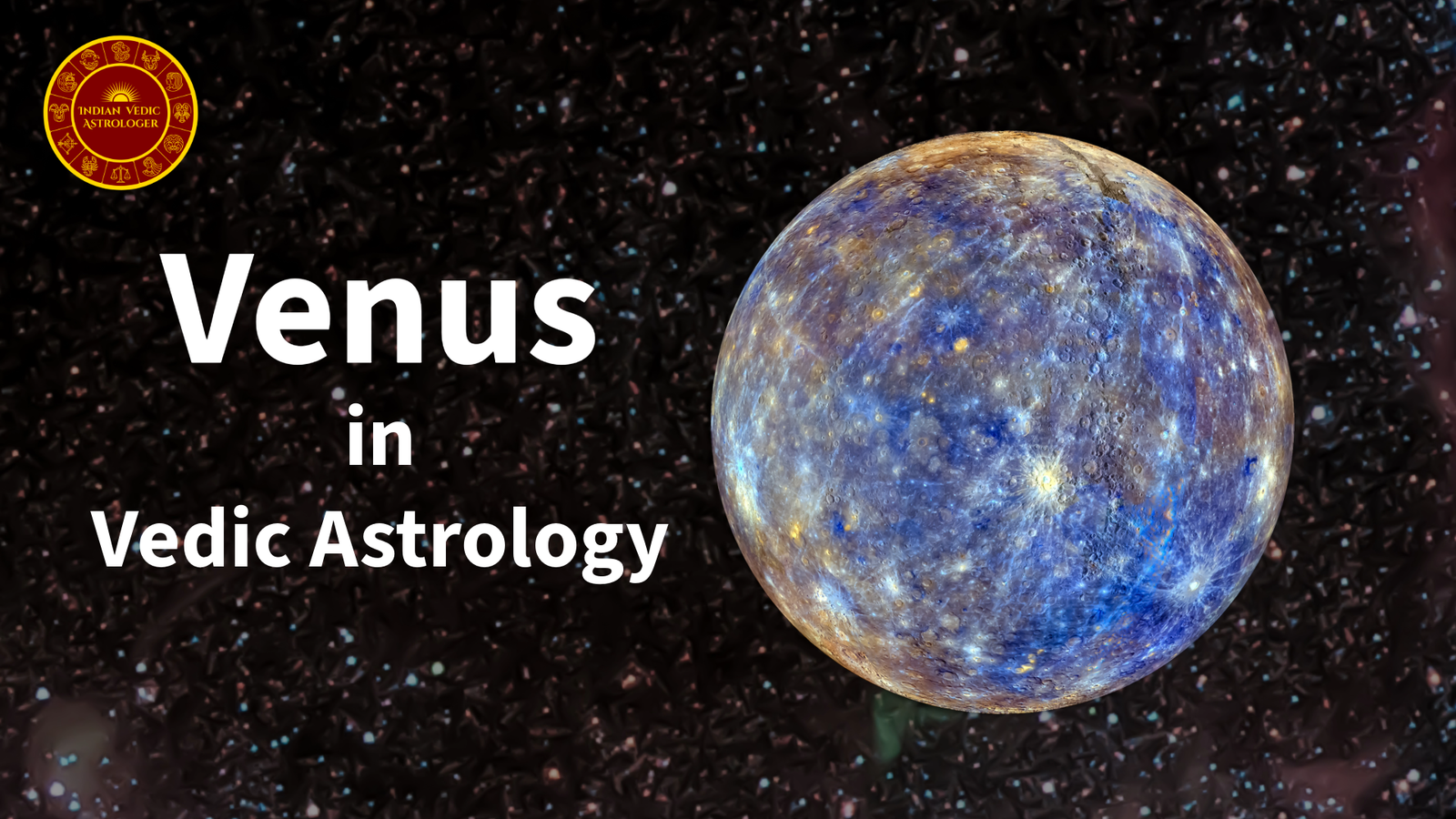
Venus in Astrology
Venus in Vedic Astrology Nature, Emotions, and Its Influence on Personality In Vedic astrology, Venus is considered a completely earthly planet. It is closely connected with the experiences and pleasures of human life. Venus represents the aspects of life that bring enjoyment, beauty, harmony, and satisfaction. Because of this, Venus is associated with desire, attraction, and the wish to experience comfort and happiness. Venus is described as a rajasic planet, meaning it is connected with activity, desire, and worldly enjoyment. At the same time, it is also regarded as a planet filled with virtues and strength. Its influence encourages people to appreciate beauty, relationships, art, and the pleasant aspects of life. Through its nature, Venus reminds us that human life is not only about duty and struggle but also about enjoyment, creativity, and harmonious relationships. Venus and Human Desires One of the most important characteristics of Venus is its connection with desire, enjoyment, and wishes. Venus expresses emotions related to pleasure and attraction. It governs the human tendency to seek happiness, affection, and companionship. Desire under the influence of Venus is not only emotional but also practical. The wishes represented by Venus often lead to action. A person may feel a strong desire for comfort, love, or beauty, and this desire eventually motivates effort through both the body and the mind. In this way, Venus transforms feelings and wishes into practical action. The energy of Venus encourages people to work toward the things that bring joy and satisfaction in life. Venus and Artistic Nature Venus is strongly associated with artistic and poetic tendencies. People influenced by Venus often develop an appreciation for music, poetry, painting, literature, and other creative forms of expression. The planet inspires creativity and imagination. It allows individuals to see beauty in the world and express that beauty through artistic effort. Because of this influence, Venus is often connected with artists, musicians, poets, and individuals who value aesthetic expression. This artistic inclination also reflects Venus’s gentle and refined nature. It encourages harmony, balance, and elegance in both thought and action. The Power of Charm and Gentleness Another important quality of Venus is its ability to influence others through charm and gentleness. Unlike planets that rely on force or authority, Venus works through attraction, kindness, and persuasion. The planet possesses the power to guide or control situations through pleasant behavior and diplomacy. People influenced by Venus often win the support of others through politeness, grace, and understanding. This gentle influence makes Venus strongly connected with social interactions. It encourages cooperation rather than conflict and harmony rather than competition. Venus and Social Harmony Venus is naturally sociable and social. It supports friendly relationships, cooperation, and equality among people. Individuals influenced by Venus often enjoy being part of social groups and maintaining harmonious relationships. Because of this quality, Venus is considered the planet of friendship, compromise, and peace. It encourages people to resolve conflicts through understanding rather than confrontation. Venus also promotes mutual respect and fairness in relationships. Its influence helps individuals build connections based on trust, affection, and cooperation. Venus as a Constructive Planet The nature of Venus is constructive rather than destructive. Its influence focuses on building harmony, beauty, and comfort in life. Instead of creating conflict or destruction, Venus encourages growth through love, cooperation, and understanding. Because of this constructive nature, Venus represents qualities such as purity, gentleness, and chastity. These qualities reflect the refined and balanced side of Venus’s influence. Although Venus is connected with desire and enjoyment, it also encourages moderation and emotional sensitivity. It reminds individuals to seek pleasure in ways that maintain harmony and respect. Desire as a Practical Force Venus does not represent desire as a purely emotional feeling. Instead, it shows how desire becomes a motivating force that leads to effort and action. The wishes and attractions represented by Venus often push individuals toward practical achievements. A person may desire beauty, love, comfort, or artistic expression, and this desire encourages them to work toward achieving these experiences. Through this process, Venus connects emotions with practical effort. It shows how the mind and body work together to transform wishes into reality. Venus in Combination with Other Planets The influence of Venus changes when it forms a connection or conjunction with other planets in a horoscope. These planetary combinations can shape a person’s personality, behavior, and emotional tendencies. Let’s understand the behaviour and influence of Venus when it shares the same house in your birth chart. Planet Behaviour of Venus Moon When Venus forms a connection with the Moon, the person becomes sociable, kind, and generous. This combination also develops skill in behavior and interaction with others. The individual often becomes pleasant, friendly, and capable of maintaining harmonious relationships. Sun When Venus is connected with the Sun, the person may become honest and sincere in love. Such individuals are often true lovers who appreciate natural beauty and feel a strong connection with nature. Mars When Venus comes with Mars, passion and emotional intensity increase. The individual may become strongly attracted to admiration and love. This combination often produces curiosity about relationships and increases sexual desire and emotional excitement. Mercury When Venus forms a connection with Mercury, it produces sensuality, sweetness in speech, and artistic ability. The person may become eloquent, refined in communication, and inclined toward artistic expression. Jupiter When Venus is connected with Jupiter, the individual may become cultured and learned. This combination can produce poets, scholars, and individuals with refined intellectual interests. However, it may also increase pride or arrogance in some cases. Saturn When Venus forms a connection with Saturn, the person may become popular, wealthy, and respected in society. This combination often creates strong social connections and may bring benefits through women. It can also produce individuals who are sociable and influential within their communities. Conclusion Venus plays an important role in Vedic astrology as the planet of desire, enjoyment, beauty, and harmony. Its influence encourages people to appreciate art, relationships, and the pleasant aspects of life. As
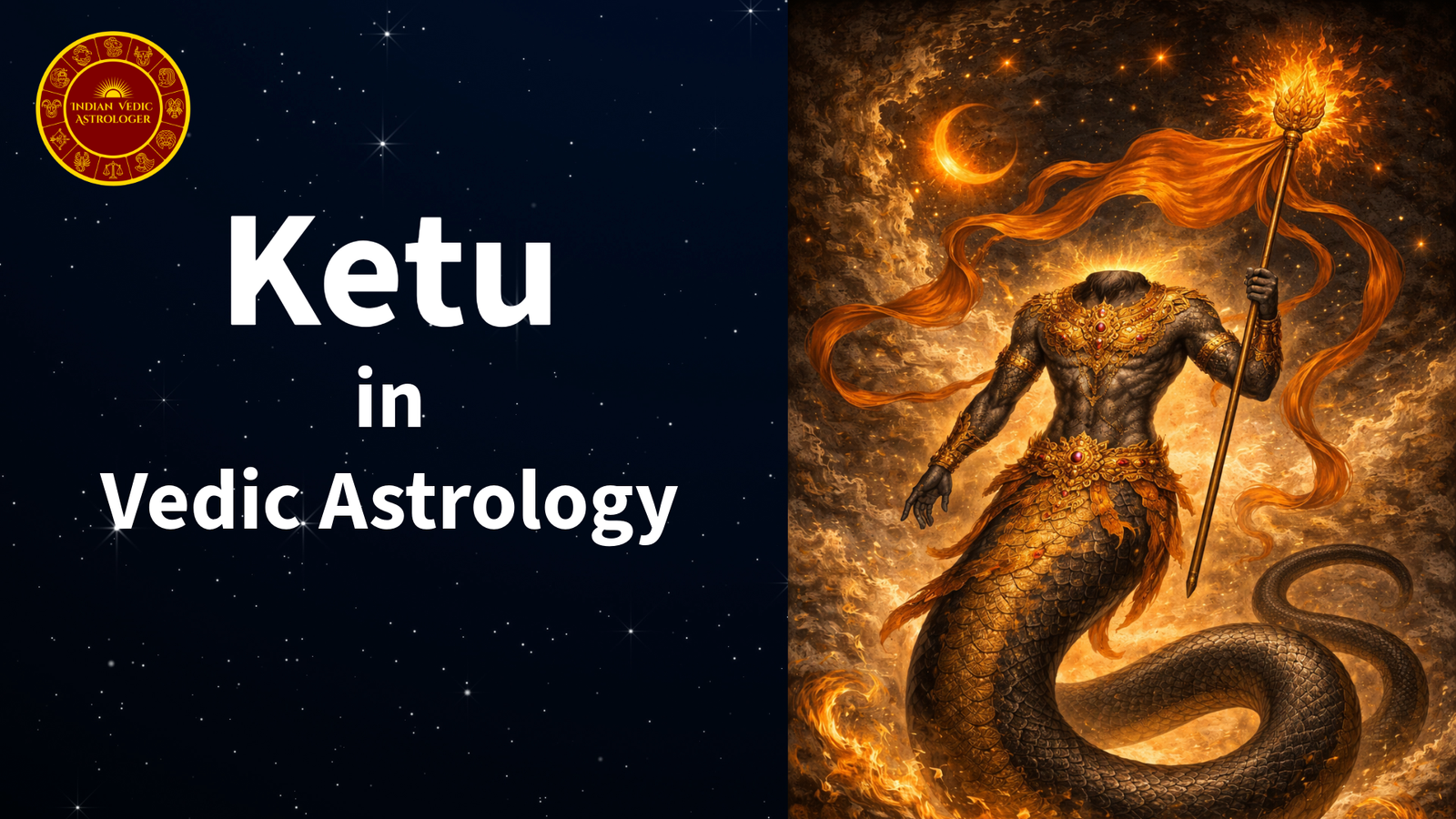
Ketu in Astrology
Ketu in Vedic Astrology Nature, Mysticism, and Its Influence on Life In Vedic astrology, Ketu is known as a mysterious and powerful shadow planet. Unlike the visible planets, Ketu does not have a physical body and is therefore described as a smoky and shadowy influence. It is often depicted as tall and robust in form, yet it is known for its unusual nature because it is believed to have no head. This symbolic description reflects its detached and mechanical way of functioning. Ketu’s actions are often described as automatic or mechanical, operating beyond ordinary reasoning or logic. Because of this unusual nature, Ketu is considered the most mystical planet among all the planetary influences in Vedic astrology. Its energy is closely associated with spiritual insight, detachment, and the deeper mysteries of life. One of the most important characteristics of Ketu is its connection with deep meditation and spiritual awareness. Ketu encourages a person to look inward and explore the deeper dimensions of the mind and consciousness. The Nature and Personality Influenced by Ketu Ketu is often associated with a mixture of unusual and contrasting qualities. It may make a person self-centered, yet at the same time tolerant and patient. This combination reflects the complex nature of Ketu’s influence. Under certain conditions, Ketu can also create negative tendencies. It may make a person treacherous, heartless, or ungrateful in behavior. These traits often arise from the planet’s detached and unpredictable nature. Ketu is known for creating sudden changes in life. It may give a person great opportunities or benefits suddenly, but it can also take them away just as quickly. Because of this, Ketu is often associated with unexpected gains and unexpected losses. Another important aspect of Ketu’s nature is its tendency to create disruptions. It often produces obstacles, difficulties, or sudden changes that disturb the normal flow of life. These disruptions may appear confusing or difficult to understand at first. Sudden Changes and Challenges Ketu’s influence is strongly connected with sudden advancement or sudden decline. A person may experience rapid progress in certain areas of life, only to face an unexpected setback later. This unpredictable nature can sometimes lead to experiences such as humiliation, accidents, demotion, or panic. Confusion and uncertainty may also appear during periods strongly influenced by Ketu. Financial hardship is another possibility associated with Ketu’s influence. Because it can suddenly remove comforts or resources, individuals may experience fluctuations in financial stability. Ketu may also create a sense of discouragement or lack of enthusiasm. A person may feel disconnected from worldly ambitions or lose interest in material pursuits. Although these experiences can be difficult, they often encourage deeper reflection and spiritual growth. Ketu’s challenges frequently push individuals to look beyond material success and search for inner meaning. Ketu’s Spiritual Influence Despite the difficulties it may create, Ketu is strongly connected with spirituality. It is often linked with meditation, introspection, and spiritual discipline. Ketu encourages individuals to detach from worldly attachments and explore deeper truths. Through this detachment, a person may develop a greater understanding of life’s spiritual dimension. Because of this spiritual connection, Ketu is often associated with practices such as meditation, yoga, and contemplation. Ketu in Combination with Other Planets The influence of Ketu can change significantly when it forms relationships with other planets in a horoscope. These combinations can affect a person’s character, behavior, and experiences in different ways. Let’s understand the behaviour and influence of Ketu when it resides in the same house in your birth chart. Planet Behaviour of Ketu Moon When Ketu forms a connection with the Moon, the mind may become unstable or disturbed. The person may experience emotional distress or confusion. Traditional interpretations also associate this combination with difficulties affecting the mother, while harm or suffering may affect the father or a close friend Mars When Ketu is associated with Mars, the individual may become short-tempered and easily irritated. The person may also display deceitful or fickle behavior. Harshness in speech or action may appear, although the individual may also develop tolerance and a certain fear or avoidance of pleasures. Venus When Ketu is associated with Venus, the individual may become lazy, talkative, or discouraged in attitude. This combination may also bring opposition or disagreements within the family environment. Jupiter When Ketu forms a connection with Jupiter, its spiritual qualities become stronger. This combination often creates interest in religious or spiritual practices. The person may develop attraction toward worship, yoga, meditation, and other forms of spiritual discipline. Saturn When Ketu forms a connection with Saturn, the person may become brave, hardworking, and knowledgeable. Such individuals may develop strong speaking abilities and become skilled communicators. However, they may still face financial constraints and health issues related to the stomach. Conclusion Ketu occupies a unique place in Vedic astrology as a mystical and shadowy planetary influence. It is associated with sudden changes, unexpected events, and the deeper spiritual dimensions of life. Its nature includes both challenging and transformative qualities. Ketu may create obstacles, confusion, financial difficulties, or sudden changes, but it also encourages detachment, meditation, and spiritual growth. When connected with other planets, Ketu’s influence can shape a person’s character and life experiences in many different ways. Understanding the nature of Ketu helps reveal how challenges and uncertainties can ultimately guide individuals toward deeper awareness and spiritual insight. Book your Private Consultation Order your Vedic Kundali Edit Template
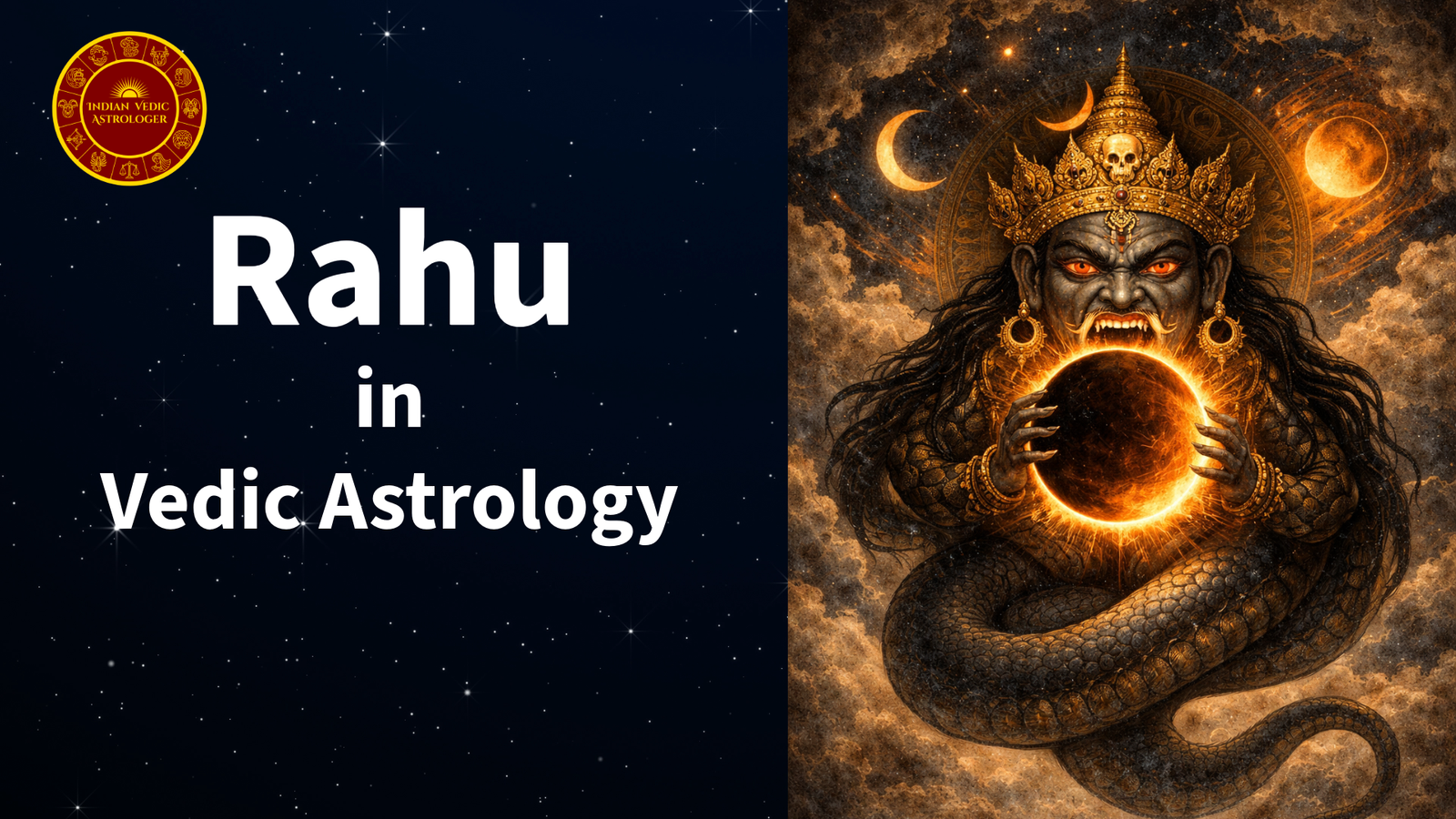
Rahu in Astrology
Rahu in Vedic Astrology Nature, Meaning, and Its Influence on Life In Vedic astrology, Rahu is a powerful and mysterious planetary force. It is closely connected with strong emotions, intense desires, and complex mental states. Rahu represents the energy that creates movement and disturbance in life. Just as an object may suddenly be set into motion and then become still again, Rahu reflects this changing and restless nature of human emotions and experiences. Rahu often brings situations that are difficult to understand clearly. Emotions such as nervousness, confusion, dilemma, and complexity are commonly associated with its influence. Because of this, Rahu is often connected with situations that appear complicated, uncertain, or puzzling. At the same time, Rahu also represents powerful emotional energies. Feelings such as strength, intensity, impulse, anger, excitement, passion, and even violence can arise under its influence. Rahu magnifies emotional reactions and creates strong inner drives that push a person toward action. Rahu and Mental Excitement One of Rahu’s key characteristics is mental excitement. Rahu creates a restless mind filled with desires and ambitions. Because of this constant mental activity, a person influenced by Rahu may often face obstacles and troubles in life. Strong desires and a greedy nature can sometimes lead individuals into complicated situations. Rahu encourages people to pursue their ambitions with great intensity, but this intensity can also create confusion and instability if not controlled. For this reason, Rahu’s influence can produce periods of struggle and challenge. The mind may feel unsettled, and the individual may constantly search for something more. Rahu pushes people toward experiences that test their judgment and emotional balance. At the same time, Rahu often gives a tendency toward solitude. People influenced by Rahu may prefer a solitary life or may feel separated from others at certain stages of life. Positive Nature of Rahu Although Rahu is often associated with confusion and intense desires, it also has positive qualities when its nature becomes auspicious. In such situations, Rahu can develop qualities such as tolerance toward religion, humility, and generosity. A well-placed Rahu can create a strong desire to rise high in life. The person may become determined to improve their position and achieve success through effort and determination. When Rahu’s energy is directed in a balanced way, it can produce individuals who are ambitious yet humble, practical in their approach to life, and willing to support charitable activities. Rahu as a Significator in Vedic Astrology In astrology, Rahu is known as a significator of several important aspects of life. It is associated with salvation, sudden wealth, lost objects, hidden treasures, politics, and foreign travel. Rahu is also connected with sharp intellect and the ability to think practically. It often gives individuals the ability to understand complicated situations and find unconventional solutions. In traditional astrological interpretation, Rahu is also considered a significator of the grandfather. Its influence can therefore be connected with ancestral patterns and family lineage. Because of its mysterious nature, Rahu is also linked with hidden or unexpected gains. Sudden opportunities, discoveries of lost items, or the uncovering of hidden wealth may sometimes occur under Rahu’s influence. Physical and Practical Nature of Rahu Rahu is considered a practical planet in astrology. It is often described as tall, strong, and dark-skinned in physical symbolism. This description reflects the powerful and intense energy associated with Rahu. Rahu’s influence is also connected with certain unusual or unconventional environments. Opportunists, low-level spirits, and cruel or harsh individuals are sometimes said to live under Rahu’s influence. These descriptions symbolize Rahu’s connection with the darker or more complex sides of human nature. Rahu often brings individuals into contact with situations that test their moral judgment and emotional strength. Rahu in Favorable Houses Despite its reputation for creating confusion or disturbance, Rahu can also bring significant benefits when placed favorably in a horoscope. When Rahu is positioned in the 3rd, 6th, or 10th houses and placed in a good zodiac sign, it can bestow many comforts and advantages. In these positions, Rahu’s powerful energy may help the individual overcome obstacles and achieve progress in life. Such placements can create courage, determination, and the ability to handle difficult circumstances effectively. Rahu in Combination with Other Planets The influence of Rahu changes when it forms a connection or conjunction with other planets. These combinations can shape a person’s character and behavior in different ways. Let’s understand the behaviour and influence of Rahu when it shares the same house in your birth chart. Planet Behaviour of Rahu Moon When Rahu connects with the Moon, the person may become highly emotional and sometimes narrow-minded. This combination can also create a strong desire for travelling and exploring different places. Sun When Rahu is connected with the Sun, the individual may become clever and thoughtful but may also experience worries related to children or fear of punishment from authority or government. Mars When Rahu is in conjunction with Mars, the individual may become imprudent, irritable, sulky, and strongly sensual in nature. This combination can increase impulsive actions and emotional intensity. Mercury When Rahu forms a connection with Mercury, it can produce intelligence and cleverness. The person may become a good singer, prudent, eloquent, self-respecting, and fond of music. Jupiter When Rahu forms a connection with Jupiter, the person may develop a calm and Satvik nature. Such individuals may become thoughtful, philosophical, and capable of forming strong resolutions in life. Saturn When Rahu is connected with Saturn, the person may become thrifty and introspective. This combination can produce writers, preachers, or individuals who gain popularity through serious thinking and expression. However, it may also create tendencies to betray friends or behave cautiously in relationships. Venus When Rahu is connected with Venus, the person may become fickle or unstable in relationships and emotions. This combination can create fluctuating desires and changing interests. Conclusion Rahu’s nature in Vedic astrology is complex and powerful. It represents strong emotions, mental excitement, desires, and intense life experiences. While Rahu can create confusion, nervousness, and obstacles, it also provides
Sun in Astrology
Sun in Vedic Astrology Nature, Emotions, and Its Influence on Personality In Vedic astrology, the Sun is regarded as one of the most powerful and significant planets. It represents authority, vitality, self-confidence, and leadership. The Sun symbolizes the core of a person’s identity and reflects qualities such as dignity, strength of character, and the ability to guide others. Just as the Sun is the center of the solar system, it represents the central force in human personality. It influences a person’s confidence, reputation, and position in society. The nature of the Sun in a horoscope often determines how a person expresses authority, responsibility, and personal power. The influence of the Sun, however, depends greatly on its position in the horoscope. When it is placed in an auspicious position, it produces noble and constructive qualities. When it is placed in an inauspicious position, its energy may express itself through arrogance and misuse of power. Sun in an Auspicious Position When the Sun occupies an auspicious position in the horoscope, it produces strong and positive qualities in a person’s character. One of the most noticeable results is wealth and prosperity. A favorable Sun can support success, financial stability, and a respectable position in society. Truthfulness is another important quality associated with a well-placed Sun. Such individuals often value honesty and integrity. They prefer to speak the truth and conduct their lives with sincerity and moral strength. Fame and recognition may also come under the influence of an auspicious Sun. Because the Sun represents authority and visibility, it often gives individuals a prominent place in society. Their abilities and actions may become widely known, earning them respect and admiration. Good health is another positive effect of a strong Sun. Since the Sun represents vitality and life energy, its favorable placement often strengthens the body and supports physical well-being. Authority and leadership are key qualities associated with the Sun. When placed in a strong position, the Sun encourages individuals to take responsibility and guide others. Such people often enjoy leadership roles and may naturally rise to positions of influence. Kindness is also an important trait of a well-placed Sun. Although the Sun represents authority and power, it can also create a sense of generosity and compassion toward others. Self-confidence is one of the most defining qualities of the Sun. Individuals influenced by a favorable Sun usually possess strong belief in their abilities. They are confident in their decisions and capable of acting with determination. Seriousness and talent also appear under the influence of a strong Sun. Such individuals often approach life with dedication and responsibility. Their talents may become visible through their achievements, leadership abilities, and commitment to their work. Sun in an Inauspicious Position When the Sun is placed in an inauspicious or weak position, the same qualities associated with authority and power may become distorted. Instead of producing noble leadership, the Sun may create arrogance and misuse of authority. One of the negative traits associated with an unfavorable Sun is dishonesty. The person may become inclined to lie or manipulate situations for personal benefit. Selfishness may also become dominant. Instead of using authority for the benefit of others, the individual may pursue personal goals through deceitful or unfair means. Misuse of authority is another common effect of an afflicted Sun. A person may attempt to dominate others or take advantage of their position for selfish purposes. Arrogance often appears when the Sun is negatively placed. The individual may develop excessive pride and consider themselves superior to others. Such individuals may frequently praise themselves and exaggerate their achievements. This tendency toward self-glorification may create difficulties in relationships and social interactions. Another trait associated with an inauspicious Sun is the refusal to listen to others. The person may become stubborn and unwilling to consider advice or different opinions. Treacherous behavior and suspicion may also arise under the influence of a weak Sun. The individual may distrust others or act in ways that create conflict and misunderstanding. Stubbornness and obstinacy are also common qualities in such situations. The person may hold firmly to their own views and refuse to change their approach even when it is clearly necessary. The Dual Nature of Sun The Sun represents power, authority, and personal strength. Whether these qualities become constructive or destructive depends on how the Sun is positioned in the horoscope. A strong and well-placed Sun produces honesty, leadership, confidence, and recognition. It allows individuals to use their authority responsibly and contribute positively to society. However, when the Sun is weak or afflicted, the same power may turn into arrogance, deceit, stubbornness, and misuse of authority. Understanding the nature of the Sun helps explain how personal power and leadership can shape human character. Conclusion In Vedic astrology, the Sun represents authority, vitality, and leadership. When it occupies an auspicious position, it brings wealth, truthfulness, fame, health, kindness, self-confidence, seriousness, and talent. Such individuals often become respected leaders and influential figures. However, when the Sun is in an inauspicious position, it may produce negative qualities such as dishonesty, arrogance, selfishness, misuse of authority, stubbornness, and suspicion. Through its influence, the Sun teaches an important lesson about the responsible use of power. True leadership is not only about authority but also about honesty, kindness, and respect for others. Book your Private Consultation Order your Vedic Kundali Edit Template

Moon in Astrology
Moon in Vedic Astrology Nature, Emotions, and Its Influence on Personality In Vedic astrology, the Moon plays a very important role in shaping the mind, emotions, and inner nature of a person. While other planets influence external actions and circumstances, the Moon primarily governs feelings, imagination, and emotional responses. It reflects how a person thinks, reacts, and experiences the world internally. The Moon represents the mind and emotional sensitivity. It influences mood, creativity, tenderness, and the ability to connect with others through feelings. Because of its strong connection with the mind and emotions, the position of the Moon in a horoscope greatly affects a person’s personality and behavior. The effects of the Moon vary depending on whether it occupies an auspicious or inauspicious position in the horoscope. Moon in an Auspicious Position When the Moon is placed in an auspicious position, it expresses sattvic qualities, which reflect purity, balance, and positive emotional expression. Such individuals usually possess a calm and gentle nature. A person with a favorable Moon tends to be humble and sweet-speaking. Their speech is polite and pleasant, which helps them maintain harmonious relationships with others. They usually prefer peaceful interactions and avoid unnecessary conflict. Intelligence is another important quality associated with a strong Moon. These individuals often possess a thoughtful and perceptive mind. Their understanding is guided not only by logic but also by emotional awareness. Calmness is one of the most noticeable traits of a well-placed Moon. The mind remains steady and balanced even in challenging situations. This emotional stability allows the person to handle difficulties with patience and composure. A favorable Moon also gives capability and emotional strength. Such individuals are able to understand the feelings of others and respond with kindness and sympathy. Tenderness and compassion become natural qualities in their behavior. Imagination is another important gift of the Moon. People with a strong Moon often possess a creative mind. Their imagination may express itself through art, writing, ideas, or innovative thinking. Their emotional depth helps them create and express feelings in meaningful ways. The Moon also encourages activity and creativity in emotional expression. Feelings are not suppressed but are expressed constructively through actions, thoughts, and creative pursuits. Leadership tendencies may also develop under the influence of a strong Moon. Such individuals often enjoy guiding others and may naturally take responsibility in social or professional situations. Another characteristic associated with a favorable Moon is an interest in travel or movement. The individual may enjoy visiting different places and experiencing new environments. Traditional descriptions also associate a well-placed Moon with a royal nature. This does not necessarily mean royalty in a literal sense but reflects dignity, grace, and a respectable presence in society. Good health is also often connected with an auspicious Moon. Since the Moon governs the mind and emotional balance, its positive placement helps maintain both mental and physical well-being. Moon in an Inauspicious Position When the Moon is placed in an inauspicious or unfavorable position, its nature becomes tamasic, which reflects heaviness, confusion, and negative emotional tendencies. In such circumstances, the mind may become restless and unstable. The person may experience frequent changes in mood and difficulty maintaining emotional balance. Cruelty or harshness may also appear in behavior. Instead of tenderness and kindness, the individual may respond to situations with anger or indifference. Stubbornness is another trait associated with an unfavorable Moon. The person may resist advice or refuse to change their views even when it is beneficial to do so. Treacherous behavior may also develop in some cases. The individual may act in ways that are unreliable or untrustworthy, creating difficulties in relationships. Selfishness and greed can also appear when the Moon is weak or negatively placed. Instead of considering the well-being of others, the person may focus mainly on personal gain or satisfaction. Laziness may also become a problem under the influence of an unfavorable Moon. Motivation and energy may decline, making it difficult for the individual to pursue goals actively. Health problems may also arise because the Moon governs the mind and emotional stability. Mental stress or emotional imbalance may gradually affect physical well-being. Traditional interpretations also mention that such individuals may become excessively influenced by others, particularly women, and may lack independence in decision-making. Another characteristic of an inauspicious Moon is a tendency toward isolation or lack of social interest. The individual may avoid social interaction or find it difficult to maintain harmonious relationships with others. The Importance of the Moon in Life The Moon plays a central role in shaping emotional life and mental stability. It governs imagination, creativity, sensitivity, and emotional awareness. Because the mind influences nearly every aspect of human behavior, the Moon becomes one of the most important planets in astrology. A strong and balanced Moon creates calmness, kindness, intelligence, and emotional harmony. On the other hand, a weak or afflicted Moon may produce restlessness, stubbornness, selfishness, and emotional instability. Conclusion In Vedic astrology, the Moon represents the mind, emotions, and inner nature of an individual. Its influence determines how a person experiences feelings, responds to situations, and connects with others. When the Moon occupies an auspicious position, it produces sattvic qualities such as humility, sweet speech, intelligence, calmness, imagination, creativity, leadership, and good health. However, when the Moon is placed in an inauspicious position, it may create tamasic qualities such as restlessness, cruelty, stubbornness, selfishness, greed, laziness, and emotional instability. Understanding the nature of the Moon helps us recognize how deeply the mind and emotions influence the course of human life. Book your Private Consultation Order your Vedic Kundali Edit Template